Ever wondered why some kitchen knives have that elegant curve, while others are straight as an arrow? That subtle or pronounced arc, often called the “belly” of the blade, isn’t just for show. It’s a fundamental design choice that unlocks a whole new world of cutting techniques, making the curved kitchen knife an indispensable tool for anyone serious about their cooking. If you’re looking to elevate your kitchen game, understanding and mastering the curved kitchen knife is your next step.
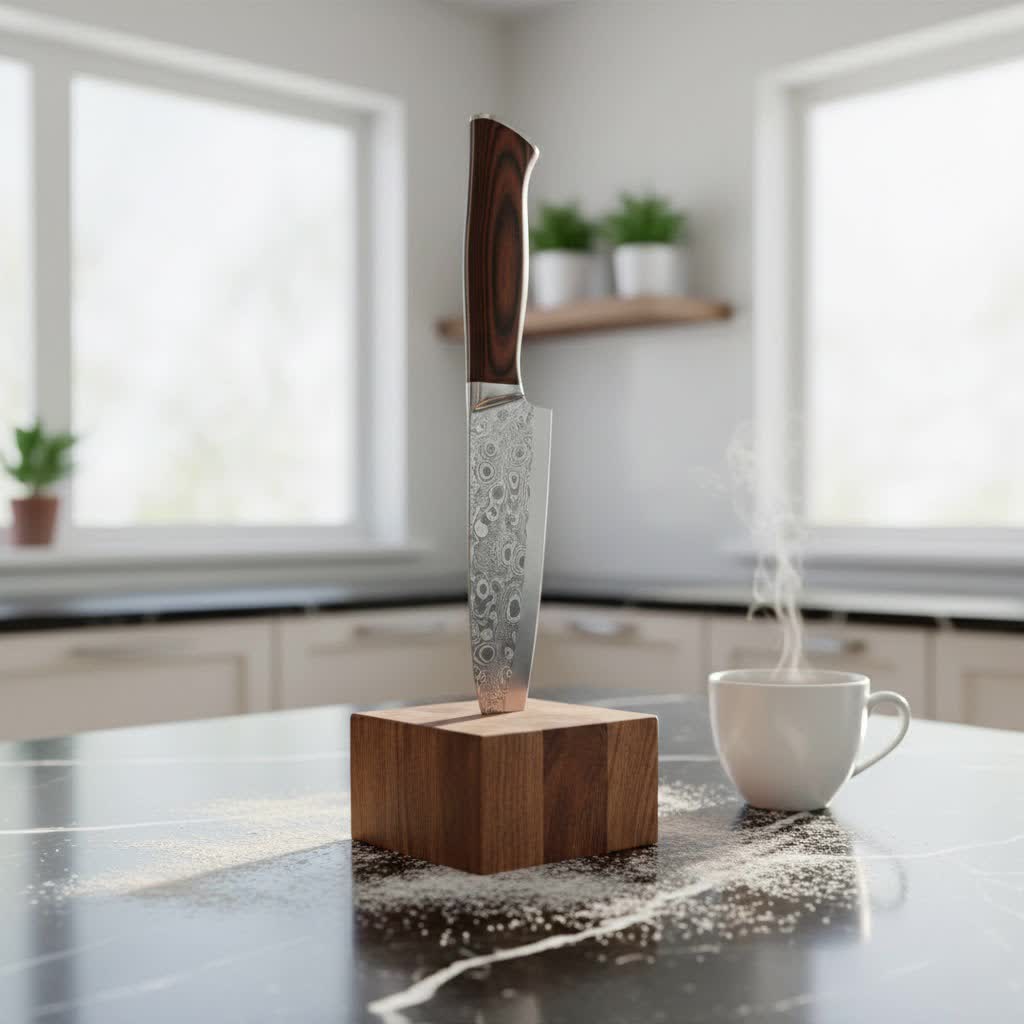
From the home cook to the seasoned chef, a quality curved knife can transform your prep work, making chopping, dicing, and mincing faster, more efficient, and even more enjoyable. It’s about more than just a sharp edge; it’s about precision, rhythm, and the ability to glide through ingredients with effortless grace. Here at Góc Dao Bếp Việt, we’re diving deep into what makes these blades so special, how to choose the perfect one, and how to wield it like a pro.
What is a Curved Kitchen Knife and Why Does it Matter?
At its core, a curved kitchen knife is any knife with a distinct upward sweep from the heel to the tip of its blade. The most common examples you’ll encounter are the classic Chef’s knife and the versatile Santoku. This curvature allows for a specific cutting motion known as the “rocking chop,” where the tip of the knife remains in contact with the cutting board while the rest of the blade slices through food in a fluid, rocking motion.
This design offers significant advantages:
- Efficiency in Chopping: The rocking motion minimizes lifting the entire knife, speeding up repetitive tasks like mincing herbs or dicing onions.
- Versatility: A well-designed curved blade can handle a wide array of tasks, from delicate slicing to robust vegetable preparation.
- Reduced Fatigue: The natural arc allows for a more ergonomic cutting action, reducing strain on your wrist and arm during extended prep sessions.
The Stars of the Curve: Common Curved Kitchen Knife Types
When we talk about the curved kitchen knife, a few types immediately come to mind, each with its unique characteristics and ideal uses:
- Chef’s Knife: The quintessential all-rounder, typically 6 to 12 inches long, with a pronounced curve along the belly. It’s designed for chopping, slicing, dicing, and mincing. Its pointed tip is also great for piercing and precise cuts.
- Santoku Knife: A Japanese-style knife, often 5 to 7 inches long, characterized by a flatter profile than a Chef’s knife, but still possessing a noticeable curve towards the tip. Its name means “three virtues,” referring to its ability to handle meat, fish, and vegetables.
- Boning Knife: These slimmer, often more flexible knives feature a distinct curve to help separate meat from bone, navigating tight spaces and contours with ease.
- Utility Knife: A smaller, more agile version of the chef’s knife, usually 4 to 6 inches, with a moderate curve for general-purpose tasks where a larger knife might be cumbersome.
|
Our Picks for the Best Knife Set in 2026
As an Amazon Associate I earn from qualifying purchases.
|
||
| Num | Product | Action |
|---|---|---|
| 1 | Knife Sets for Kitchen with Block imarku G14 Japanese Knife Set Stainless Steel Kitchen 14pcs, Built-in Sharpener, Sharp Knives with Non-slip Ergonomic Handle - Dishwasher Safe, Home Essential Gifts |

|
| 2 | HOSHANHO 16-Piece Knife Set, Japanese High Carbon Stainless Steel Kitchen Knife Set, Ultra Sharp Chef Knife Block Set with Sharpener |
|
| 3 | WXCOO Hand Forged 3-Piece Knife Set High Carbon SteelKitchen Knives Meat Boning Cleaver Cheese Knife Professional Butcher Hunting Fish Fruit Viking Knife with Sheath for Hiking, Camping, Fishing, BBQ |
|
| 4 | Astercook 15 Piece Knife Set with Sharpener Block - German Stainless Steel, Dishwasher Safe Kitchen Knives with Built-In Sharpener, Black |
|
| 5 | CAROTE 14 Pieces Knife Set with Block, Forged, High Carbon Stainless Steel Sharp Blade Block Knife Set, Dishwasher Safe Cutlery, Cream |
|
| 6 | Knife Set, Brewin Kitchen Knife Set, Knives Set for Kitchen, Universal Knife Block, Utility Knife Block Set, New Home Essentials, Apartment Essentials, Dishwasher Safe |
|
| 7 | Astercook Knife Set, 13 Pieces Kitchen Knives Set with Healthy Anti-Rust Coating, Dishwasher Safe, Stainless Steel Chef Knife Sets with 6 Blade Guards, Perfect Holiday Gifts for Kitchen |
|
| 8 | Amazon Basics 14-Piece High Carbon Stainless Steel Kitchen Knife Set with Full Tang Construction, Ergonomic Handles, Sharpener and Pinewood Block, Black |
|
| 9 | Laguiole Steak Knives Set of 6 - Premium Food-Grade Stainless Steel Micro-Tooth Serrated Knives for Precision Cutting - Dishwasher Safe Kitchen Utensils Set for Dinner or Gifting by Classic Cuisine |
|
| 10 | HENCKELS Statement Premium Quality 15-Piece Set with Block, Natural, Razor-Sharp, German Engineered Informed by 100+ Years of Mastery, Lightweight and Strong, Dishwasher Safe |
|
Decoding Your Next Curved Kitchen Knife: Factors to Consider
Choosing the right curved kitchen knife isn’t just about aesthetics; it’s about finding a tool that feels like an extension of your hand. Here’s what to look for:
Blade Material: Steel Under the Magnifying Glass
The material of your blade dictates its sharpness, edge retention, and ease of maintenance.
- High-Carbon Stainless Steel: This is the most common choice, offering a great balance of sharpness, durability, and resistance to rust. It’s relatively easy to sharpen and maintain.
- Carbon Steel: Known for exceptional sharpness and edge retention, carbon steel is favored by many professional chefs. However, it requires meticulous care to prevent rust and staining.
- Ceramic: Extremely sharp and lightweight, ceramic knives hold their edge for a long time but are very brittle and prone to chipping. They also require specialized sharpening.
Edge Type: The Angle of Attack
Most curved kitchen knives will feature either a Western-style double bevel (a V-shape grind on both sides of the blade) or a Japanese-style single bevel (ground on one side, creating an incredibly sharp but specialized edge). For general kitchen use, a double-bevel edge is more versatile and forgiving.
Handle Design and Ergonomics: A Comfortable Grip
A knife is only as good as how it feels in your hand. Look for a handle that offers a secure, comfortable grip, even when wet. Materials like wood, composite, or synthetic polymers are common. The balance of the knife – how it feels weighted between the blade and handle – is also crucial for control and reducing fatigue. As veteran chef Marcus Chen once advised, “Always try to hold the knife before buying it. That personal connection to the balance and feel is more important than any spec sheet.”
Balance and Weight: Finding Your Sweet Spot
A well-balanced knife feels like it pivots effortlessly at the bolster (where the blade meets the handle). Some prefer heavier knives for more power, while others opt for lighter blades for agility. This is largely a matter of personal preference, but proper balance reduces strain.
Construction: Forged vs. Stamped
- Forged Knives: Made from a single piece of steel heated and hammered into shape. They are generally more robust, heavier, and have a full tang (the steel extends through the entire handle), offering superior balance and durability.
- Stamped Knives: Cut from a large sheet of steel and then ground and sharpened. They are typically lighter, less expensive, and can still be very effective for everyday use, though they may not have the same heft or longevity as forged options.
Keeping Your Edge: Care and Maintenance for Your Curved Kitchen Knife
A sharp knife is a safe knife, and a well-maintained curved kitchen knife will serve you faithfully for years.
Washing: Gentle is Key
Always hand wash your knives immediately after use with warm, soapy water. Avoid dishwashers, as harsh detergents and high temperatures can dull the blade and damage the handle. Dry thoroughly to prevent rust, especially with high-carbon steel.
Sharpening: Maintaining the Arc
Regular sharpening is crucial. For a curved blade, you’ll want to use a sharpening stone or a professional sharpener who understands the nuances of maintaining that curve. Steel rods (honing steels) are excellent for realigning the edge between sharpenings, keeping your blade performing optimally. “Don’t wait until your knife is dangerously dull,” says knife expert Isabella Rossi. “A quick hone before each use makes all the difference.”
Storage: Safe and Sound
Protect your blade and your fingers by storing knives safely. Options include:
- Knife Blocks: Convenient and keep blades covered.
- Magnetic Strips: Space-saving and display your collection.
- In-Drawer Trays: Keep blades protected within a drawer.
- Blade Guards: Simple plastic or felt covers for individual knives.
The Undeniable Benefits of a Quality Curved Kitchen Knife
Investing in a high-quality curved kitchen knife isn’t just about buying a tool; it’s about investing in your culinary journey.
- Enhanced Precision and Control: The rocking motion allows for incredibly fine mincing and precise cuts, giving you better control over your ingredients.
- Increased Efficiency in the Kitchen: Speed up your prep time significantly, whether you’re breaking down a chicken or preparing a mountain of vegetables.
- Versatility for Various Tasks: From delicate herbs to tough root vegetables, a good chef’s knife can handle almost anything you throw at it.
- Improved Safety: A sharp, well-maintained knife is less likely to slip, reducing the risk of accidents. When you’re not struggling with a dull blade, you’re safer.
- Longevity and Durability: A quality knife, especially a forged one made from superior steel, can last a lifetime with proper care.
Popular Brands: Who Makes the Best Curved Kitchen Knives?
The market is flooded with fantastic knife brands, each with its loyal following. Here’s a brief overview of some commonly praised manufacturers known for their excellent curved kitchen knives:
- Wüsthof (Germany): Renowned for their precision-forged, high-carbon stainless steel knives, offering exceptional balance and edge retention. Their Classic Chef’s knife is a benchmark.
- Victorinox (Switzerland): Famous for their incredibly sharp, durable, and affordable Forschner Fibrox Pro Chef’s knife, a favorite among many professionals for its value.
- Shun Cutlery (Japan): Celebrated for their exquisitely crafted Damascus steel knives, often with thinner, sharper blades and beautiful aesthetics. Their Classic Chef’s knife and Santoku are top-tier.
- Global (Japan): Distinctive for their unique all-stainless steel design and razor-sharp edges. Their Chef’s knives are lightweight and incredibly agile.
- Zwilling J.A. Henckels (Germany): Another German powerhouse offering a wide range of forged knives, from their entry-level Gourmet series to their premium Pro line, known for ergonomic handles and durability.
Mastering the Curved Blade: Safe and Effective Knife Usage
Using a curved kitchen knife effectively goes beyond just pushing it through food. It involves proper technique and, most importantly, safety.
The Rocking Motion: Your New Best Friend
This is the signature technique for most curved knives. Place the tip of the blade on the cutting board, then lower the heel, pushing the blade forward as you bring it down to slice through the food. Rock the knife back and forth, keeping the tip in contact with the board, to mince or chop quickly and efficiently.
The Claw Grip: Protecting Your Fingers
When holding food, curl your non-dominant hand into a “claw” shape, with your fingertips tucked under. The flat side of the blade should rest against your knuckles, guiding the knife and keeping your fingers safely out of harm’s way.
Maintain a Clean Cutting Board
Always work on a stable, non-slip cutting board. A messy board can lead to slips and accidents. Keep a damp cloth nearby to wipe away scraps.
Practice Makes Perfect
Like any skill, knife work improves with practice. Start with softer vegetables and gradually work your way up. Focus on smooth, controlled movements rather than speed.
Frequently Asked Questions About Curved Kitchen Knives
Q: What is the main difference between a curved kitchen knife and a straight-edge knife?
A: The main difference lies in their primary cutting motion. A curved kitchen knife, like a chef’s knife, is designed for a rocking motion where the tip stays on the board, making it ideal for chopping and mincing. A straight-edge knife, like a utility or paring knife, is better suited for push cuts or slicing with a single, precise downward motion.
Q: Can I use a curved kitchen knife for all my cutting needs?
A: While a good curved chef’s knife is incredibly versatile and can handle a majority of kitchen tasks, some specialized tasks might benefit from other knife types. For instance, a small paring knife is better for intricate peeling, and a serrated knife is essential for bread. However, for most chopping, slicing, and dicing, a curved knife is often your best choice.
Q: How often should I sharpen my curved kitchen knife?
A: The frequency depends on how often you use it and the material of the blade. For an average home cook using a high-carbon stainless steel knife regularly, honing (realignment) before each use and a full sharpening every few months is a good guideline. If you notice it dragging through food or requiring more force, it’s time to sharpen.
Q: Are more expensive curved kitchen knives always better?
A: Not always. While higher-priced knives often use premium materials and craftsmanship, there are excellent mid-range options that offer superb performance and durability. The best knife for you is one that feels comfortable, performs well for your needs, and fits your budget, regardless of its price tag.
Q: What are some common mistakes to avoid when using a curved kitchen knife?
A: Common mistakes include using a dull knife, improper grip (holding the handle too far back or too loosely), using the wrong cutting board (glass or stone can dull blades quickly), and putting knives in the dishwasher. Always prioritize safety and proper technique.
Bringing It All Together: Your Culinary Journey with a Curved Blade
The curved kitchen knife is more than just a tool; it’s an invitation to a more refined and enjoyable cooking experience. By understanding its design, choosing a quality blade, and mastering its unique cutting techniques, you unlock a level of efficiency and precision that will transform your time in the kitchen. Remember, the best knife is the one that feels right in your hand, inspiring confidence and making every chop and slice a pleasure. So go ahead, find your perfect curved companion, hone your skills, and let your culinary creativity flourish.
